On January 13, 2023, the PRC state-sponsored media outlet Caixin published an article titled "The Death of Suspect Sun Renze" (嫌疑人孙任泽之死) authored by Wang Heyan (王和岩). The article chronicled how eight PRC police officers tortured Sun in an effort to force a confession out of him. According to the article, a PRC court found that the police had tortured Sun using the following methods:
- Suspending him from a beam;
- Beating him with PVC pipes;
- Hanging soda bottles filled with water from his genitals;
- Pinching his genitals;
- Applying electric shocks using an old fashioned hand-cranked telephone, which the police just happened to have on hand;
- Waterboarding him.
The foregoing is just a partial list. The goal of the police in torturing Sun was to force him to provide statements that could be used against another person who was the target of a high-profile investigation.
Other noteworthy aspects of the article:
- Initially, the police claimed that Sun had died because he choked to death while drinking water. This excuse recalls similarly ridiculous police claims in 2009 that an inmate, Li Qiaoming, had died when he hit his head playing "elude the cat" (躲猫猫 - hide and seek) with other inmates, when an investigation later found that actually the inmates had deliberately beaten him to death.
- The original autopsy said Sun's cause of death was simply "multiple organ failure." So his mother paid for another autopsy, which found that Sun's death was the result of violence, and that he had suffered from multiple injuries, including broken bones, internal bleeding, and burns.
- In an effort to get Sun's mother to drop the case, the police offered her money and other incentives. When these efforts failed, the police followed and surveilled her and her family, made threatening phone calls to her, and tried to discredit her by spreading rumors about her.
- In an effort to cover up their crimes, the police destroyed and falsified evidence, going so far as to fabricate fake video surveillance.
- The article concludes by noting that the court judgment for the case that led to Sun's arrest in the first place cannot be located on the China Judgments Online database - another example of the PRC government's failure to keep the transparency commitments it made over a decade ago (see http://blog.feichangdao.com/2022/11/censorship-of-court-judgments-in-prc.html).
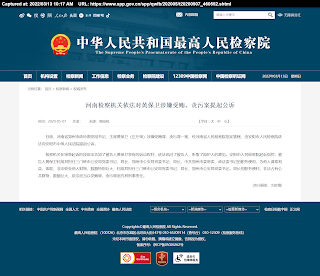
As these screenshots show, within 24 hours the Caixin article had been deleted.

The article was originally available here: https://china.caixin.com/2024-01-13/102156070.html (Archive: https://archive.ph/sWNH2). The full text was reposted on the China Digital Times website here: https://chinadigitaltimes.net/chinese/704159.html.
As these screenshots show, other articles discussing the Caixin article were also censored, such as this one titled "Why You Must Pay Attention to the Death of Sun Renze" (你为什么必须关注孙任泽之死).

Original URL: https://www.163.com/dy/article/IOHJIAA705566HKT.html
Archive: https://archive.ph/aRZZg
These screenshots of a Sina Weibo search for "Sun Renze" taken one day apart show that Sina Weibo posts discussing the Caixin article were also censored.

This screenshot was taken on January 16, 2024, and shows that Sina Weibo had banned users from establishing a topic on "Sun Renze."

A full translation of the article can be found below the following brief summary.
Sun Renze was a young man from Yining City, Yili Kazakh Autonomous Prefecture, Xinjiang Uyghur Autonomous Region, China. He was the only child of Ren Tingting, a police officer's widow.
In March 2018, Sun was criminally detained by the Yining Municipal Public Security Bureau on suspicion of disturbing the peace (寻衅滋事). Sometimes translated as "picking trouble and provoking quarrels," this "pocket crime" has been the subject of criticism by both scholars and the PRC Supreme People's Court.
On September 27, 2018, Sun fell into a coma after being interrogated by police officers at the Huocheng County Detention Center in Yili Prefecture. He was later transferred to a hospital. According to the Caixin article this is what Sun's mother saw when she saw her son in the ICU:
His right arm was exposed, and there was a purple-red scar on his wrist and shoulder blade, which were deeply sunken. I pulled away the sheets on his body, and his whole body was naked. His left arm and calf were splinted. There were scars, many scabs, and his testicles were red and swollen.On November 9, 2018, Sun, who had been in the ICU for 43 days, succumbed to his injuries and died.
The initial autopsy concluded that Sun's death was caused by multiple organ failure. However, his mother believed that he had been tortured to death by police officers, and she fought for years to bring her son's killers to justice.
In 2023, eight police officers were convicted of intentional injury and sentenced to between 3 and 13 years in prison.
Full Translation of Caixin's "The Death of Suspect Sun Renze" (嫌疑人孙任泽之死), by Wang Heyan (王和岩).
Throughout the trial Ren Tingting had sat weeping at the table. Just prior to the court adjourning, Ren Tingting suddenly stood up from the prosecution table and shouted at the eight suspects in the audience: "Murderers, I will never forgive you." There was a commotion, and the judge hurriedly spoke out to stop her. Ren Tingting was over 50 years old and lived in Yining City, Yili Kazakh Autonomous Prefecture, Xinjiang Autonomous Region. Her husband was a senior police officer who had died in the line of duty. Her only son, Renze, had been criminally detained on March 27, 2018 on suspicion of disturbing the peace, and had been held at the Qapqal Xibe Autonomous County Detention Center in Yili Prefecture.
In the early morning of September 27, 2018, Sun Renze fell into coma after being interrogated by police officers at the Huocheng County Detention Center in Yili Prefecture for more than seven hours. He was later transferred to the ICUs of multiple hospitals. On November 9, Sun Renze, who had not been able to wake up, finally died of his injuries. He was not yet 31 years old.
The police claimed that during the interrogation Sun Renze had asked for water and had choked, causing him to fall into coma, and the interrogators were not responsible. Ren Tingting, who had seen her son unconscious and bruised on the hospital bed, could not accept such a conclusion. Over the next five years, she would endure pressure from all sides as she campaigned over the death of her child, until finally the truth came to light. On November 6, 2023, in a case of death caused by police officers violently extorting confessions, the Kuitun City Court in Yili Prefecture quietly pronounced the eight defendants guilty of intentional injury and sentenced them from to 3 to 13 years imprisonment.
The eight defendants in this case, Bai Zhenhua, He Defu, Wu Xuechun, Liu Xianyong, Shi Donghua, Jin Bowen, Cui Liang, and Zhu Shede, were all police officers of the Yili Prefecture Public Security Bureau and the municipal and county public security bureaus under its jurisdiction. Bai Zhenhua, born in August 1976, was the former captain of the Criminal Investigation Team of Yili Prefecture Public Security Bureau. He Defu, born in November 1962, was the former deputy captain and fourth-level senior police officer of the Legal Affairs Brigade of Kuitun City Public Security Bureau. Wu Xuemin, born in December 1986, was former deputy director of the Huocheng County Public Security Bureau and director of the Qingshuihe Branch. Liu Xianyong, born in May 1991, was former third level of the Criminal Investigation Intelligence Information Brigade of the Yili Prefecture Public Security Bureau Police Captain. Shi Donghua, born in August 1983, was the former instructor of the Criminal Police Brigade of Xinyuan County Public Security Bureau. Jin Bowen, born in January 1985, was the former deputy captain of the Economic Investigation Brigade of Huocheng County Public Security Bureau. Cui Liang, born in July 1985, was the former deputy captain of the Economic Investigation Brigade of Huocheng County Public Security Bureau. Zhu Sheide, born in October 1976, was the former captain of the Food and Drug Environmental Investigation Team of Gongliu County Public Security Bureau.
The Kuitun City Court found that the defendants, Bai Zhenhua, He Defu, Wu Xuewei, Liu Xianyong, Shi Donghua, Jin Bomin, Cui Liang, and Zhu Jiande, had committed acts of physical force such as binding, hanging, beating, and dousing with water, that resulted in the death of the victim, Sun Renze, in the course of investigating a criminal gang-related case five years earlier. The court held that the eight defendants, as police officers who had served for many years, should have been able to foresee the possible consequences of extorting confessions through torture. However, in order to obtain evidence, they tortured to extort confessions, which ultimately led to the serious consequences of the death of the victim. Their actions were in violation of the relevant provisions of the Criminal Law on the crime of intentional injury. The facts of the crime were clear and the evidence was sufficient, and constituted the crime of intentional injury. After the verdict was pronounced, five defendants, including Bai Zhenhua, He Defu, Wu Xue, Liu Xianyong and Zhu Yi, refused to accept the verdict and filed an appeal, which was heard before the Intermediate People's Court of Yili Prefecture.
“The Police Said the Man Died From Choking on Water.”
Ren Tingting remembered that at around 8 pm on September 27, 2018, she received a call from a stranger. The caller claimed to be Cui Liang, a police officer from the Criminal Investigation Team of the Yili Prefecture Public Security Bureau, and said that the leader of the Huocheng County Public Security Bureau wanted to see her, and asked her to accompany them momentarily.
Ren Tingting had been living alone since her husband, a policeman, had died in the line of duty many years before. Seeing that it was getting late, Ren Tingting did not respond. About half an hour later, Cui Liang drove a non-police Mitsubishi car to the community where Ren Tingting's home was located, and the two parties met at the entrance. Cui Liang said that the leadership was coming to her to get an understanding of the situation. Ren Tingting insisted that she would not be able to go until tomorrow. During this period, “for a long time Cui Liang kept making long distance phone calls.”
Six months prior, in March 2018, Ren Tingting’s son Renze had been criminally detained by the Yining Municipal Public Security Bureau on suspicion of disturbing the peace. He was later arrested and detained at the Qapqal County Detention Center. According to Ren Tingting, Sun Renze was an only child in the family and was favored since he was a child. When he was in junior high school, his father suddenly died of a heart attack at work. Without his father's discipline, Sun Renze became increasingly unruly. Although he later attended the police academy, he did not join the police force and continued to do business and eventually open a bar. According to Caixin’s understanding, Sun Renze was fond of socializing, most of his contacts were with people from somewhat complex social backgrounds, and he had been taken in by authorities several times over the past few years.
Ren Tingting remained at a stalemate with the police until 10:30 pm, when the police insisted on leaving immediately. Ren Tingting had no choice but to call the lawyer she had hired for her son to accompany her to Huocheng. As midnight approached, he entered Huocheng County and drove straight to the entrance of the clinic building of Huocheng County First People's Hospital (referred to as Huocheng County Jiangsu Hospital). Cui Liang asked Ren Tingting and her lawyer to go to the ICU on the second floor, but he himself did not go in. Meanwhile, another man remained standing alone some distance away.
Ren Tingting would later learn that that man's name was Wu Xuemin, and he was then the deputy captain of the Criminal Investigation Team of the Yili Prefecture Public Security Bureau. "When I got to the ICU entrance, my legs were weak," Ren Tingting said, "My son was covered with a sheet and lying on the hospital bed with tubes inserted into his body. I cried and called Renze, Renze, but there was no response. His right arm was exposed, and there was a purple-red scar on his wrist and shoulder blade, which were deeply sunken. I pulled away the sheets on his body, and his whole body was naked. His left arm and calf were splinted. There were scars, many scabs, and his testicles were red and swollen..." Ren Tingting said that she later learned that the purple scars on his shoulder blades and wrists were caused by his having been tied up with military belts and suspended for a long time, and the scabs had been caused by electric shocks. "I asked them was his left arm broken? They said that my son had choked on some water and fell to the ground, and that it had pulled out when they were pulling him up."
The police took out a medical parole form and asked Ren Tingting to sign it. Ren Tingting remembered that the medical records stated that investigators reported that in the early morning of September 27, the suspect choked on his drink and fell to the ground, and that the patient had not eaten for several days and was in a very poor mental state.
"There are so many injuries, why aren't they written down in the medical records?" Ren Tingting asked.
The leader of the Huocheng County Public Security Bureau that Cui Liang had previously mentioned never showed up, and Wu Xuemin said that the leader was not in the county. Ren Tingting refused to sign, "Wu Xuemin was extremely anxious, pacing back and forth and constantly making phone calls, like an ant on a hot wok."
At two or three o'clock in the middle of the night, Ren Tingting returned to her home in Yining. "My eldest sister had been waiting for me. I was shaking all over and cried when I told my eldest sister about this." Ren Tingting said that she and her family didn't sleep that night.
After dawn, Ren Tingting, her family, and her lawyer went to the First People's Hospital of Huocheng County. An auxiliary police officer stood at the entrance of the ICU and refused to let them in. Ren Tingting found Dr. Ma Mouna, who had participated in treating her son. "When she heard that I was Sun Renze's mother, she said she didn't know anything and ran off. I chased after her to stop her, telling her she was also a mother, and if she had seen her son is like this, would she want to find out what happened? She said I should go find the director.” Ren Tingting did not find the hospital director. The doctors involved in treating her son told her that the police said the person died from choking on drinking water and that his arm was dislocated when they attempted to rescue him.
After negotiations, the leadership of the Huocheng County Public Security Bureau finally agreed to see them in the afternoon. Ren Tingting and her lawyer came to the public security bureau and "we were not allowed to take anything with us. They searched us all over our bodies." At that time, Bai Zhenhua, who was also the deputy leader of the criminal investigation team of the Yili Prefecture Public Security Bureau, and a disciplinary inspection secretary surnamed Xu of the Huocheng County Public Security Bureau met Ren Tingting. The person who received the lawyer was Deputy Director Wang of the Huocheng County Public Security Bureau in charge of criminal investigations.
"From the outset Bai Zhenhua was trying to get close to me, saying that my husband has been his superior when he worked at the Yining County Public Security Bureau." Regarding Sun Renze's situation, Bai Zhenhua's rhetoric was the same as that of the police who had escorted her to the hospital. He said that the injuries on his wrists and legs were caused by wearing handcuffs and shackles. "I knew it was a lie as soon as I heard it. My son was a criminal suspect, not a death row inmate. Why would he always be wearing handcuffs and shackles in the detention center?" Ren Tingting asked to see the video surveillance. At first, Bai Zhenhua said that there was surveillance video, but that it was impossible to show it to her, but afterwards he changed his tune saying we'd talk about it later. Deputy Director Wang replied to the lawyer that he needed to ask for permission if he wanted to watch the video.
“We Did Everything We Could”
On September 29, the third day after Sun Renze's incident, the hospital director told Ren Tingting that they had invited the ICU director of Urumqi Xinhua Hospital for a consultation. The patient was already brain dead and would still be in a vegetative state even if he had been resuscitated. Ren Tingting recalled that she asked if the purple circles on her son's body had been caused by defibrillating him during a resuscitation attempt. The hospital director said that the patient was not breathing when he arrived, so there was no point in defibrillating. She asked to see the medical records, but the hospital director said that the hospital couldn't do that and needed permission from the police. While she was negotiating in the director’s office, Wu Xuechun remained standing at the door. “After that, whenever my family and I went to the hospital to visit my son or consult a doctor, the police were always present and following.”
It was also on this day that Ren Tingting submitted complaint materials to the Yili Prefecture Political and Legal Committee, the Discipline Inspection Team of the Public Security Bureau, the Procuratorate, and other agencies.
On October 3, Sun Renze was in critical condition and his trachea was cut open. When Ren Tingting and her family went to the hospital, six police officers or auxiliary police were guarding the outside of the ICU to prevent them from seeing him. "I said that the patient's family has the right to visit, but the doctor said that they need permission from the police. An auxiliary police pushed my eldest sister, and my eldest sister instinctively grabbed him with both hands. The auxiliary police said that my eldest sister had hit him, but my eldest sister hadn't. She is almost 70 years old." Ren Tingting said, "The police shouted into the walkie-talkie, and more than ten police rushed up and surrounded us." They were taken to a local police station and listened to Ren Tingting explain the situation. Afterwards, the police at the police station sympathized with them and did not make things difficult for them. Ren Tingting went to the Political and Legal Affairs Commission, the Public Security Bureau, the Procuratorate and other agencies to ask for visitation rights. After some back-and-forth, she and her family were allowed to visit once a week for one hour each time.
On October 12, half a month after Sun Renze's incident, he was transferred to the Yili Prefecture Friendship Hospital. The Friendship Hospital is located in Yining City and is one of the two tertiary hospitals in Yili Prefecture. During this period, Sun Renze had developed multiple critical symptoms, including renal failure and a lung infection. Ren Tingting recalled that the attending doctor at the Yili Prefecture Friendship Hospital told her that the patient's condition was very bad, and that if they said there was no hope then there was no hope, so the family members should be mentally prepared. Ever since Sun Renze had been transferred to another hospital, Ren Tingting has been going to Youyi Hospital to visit her son every day. Although she could only look at her unconscious son in the ICU ward through the glass from a distance, she still fully expected a miracle would happen.
On November 6, Ren Tingting came to the Yili Prefecture Friendship Hospital. Dr. Guo, director of ICU, and experts from the Autonomous Region told her that the hospital had tried its best to save the patient, but that the patient was in very bad condition and he was living only by his will, that he could pass away at any time, and she must be mentally prepared. "As for the other matter, you can do whatever you want. That is your right." Ren Tingting said, "I understood that she meant that I could sue whomever I wanted, and react however I wanted to react." Three days later, on November 9, 2018, Sun Renze, who had been in the ICU for 43 days, succumb to his injuries and died.
"What I Want is the Truth"
After Sun Renze's incident, the Yili Prefecture police also took action. After Sun Renze was transferred to the Yili Prefecture Friendship Hospital, the Yili Prefecture and Huocheng County Public Security Bureaus proposed a civil compensation package, "on the condition that the family members admitted that the police were not at fault."
Ren Tingting recalled that on October 22, 2018, the Discipline Inspection Team of the Yili Prefecture Public Security Bureau had called her to the Petition Office of the Prefecture Public Security Bureau. "Wu Xuemin, Cui Liang, and Inspector Qi from the Huocheng County Public Security Bureau's Inspection Team were all present. Inspector Qi said that after an investigation, the police officers responsible for Sun Renze's death were held not responsible, but they could provide us with some judicial assistance. I did not agree. . ." Ren Tingting said that later in the lawyer's office, Bai Zhenhua, Huocheng County Public Security Bureau Discipline Inspection Secretary Xu and Superintendent Qi proposed obtaining 800,000 yuan in judicial aid for her family, but she insisted that it had to be state compensation.
Ren Tingting remembered that in December 2018 or January 2019, Lu Jianjun and Bai Zhenhua, assistant chiefs of the Yili Prefecture Public Security Bureau, came to Ren Tingting's home. Lu Jianjun had previously worked in the Yining County Public Security Bureau and was a subordinate of Ren Tingting’s husband. "Lu Jianjun said that according to Yining's standards, the relief funds were very small. In order to take care of our family, the State Public Security Bureau helped to obtain first-tier city standard relief, a total of 900,000 yuan." But Ren Tingting still did not agree, she said: " If my son died of illness or a car accident, as time goes by, my pain and sadness will gradually lessen. When I think of my son's body covered with scars and not knowing how he died, time will drag on and on. The older I get, the more painful it is. What I want is the truth about how my son died."
On the night of Sun Renze's death, the Huocheng County Public Security Bureau commissioned the Yili Prefecture Zhongye Forensic Authentication Center to conduct an inspection. The identification concluded that death was caused by multiple organ failure. The physical examination report did not mention anything about what caused the multiple organ failure. Ren Tingting asked the forensic doctor why he did not identify Sun Renze's physical injuries. "The forensic doctor said that he had been enduring a lot of pressure."
Ren Tingting could not accept the conclusion of such an appraisal. She hired a law firm to apply to the Yili Prefecture Procuratorate to re-identify the cause of death. After receiving the application, the State Procuratorate did not respond. Ren Tingting said that for more than four months after that, she went to the Yili Prefecture Political and Legal Affairs Bureau every week to inquire about the progress, as well as the Central Political and Legal Affairs Commission, the Supreme People's Procuratorate, the Ministry of Public Security, etc. to expedite the complaint materials.
In the spring of 2019, the Yili Prefecture Procuratorate finally agreed to conduct a second inspection, but the appraisal fee had yet to be paid. In order to uncover the truth about her son's death as soon as possible, Ren Tingting borrowed money from various places and advanced the appraisal fee of 136,000 yuan. On March 8, 2019, Liu Liang, professor and chief forensic physician of the Department of Forensic Medicine, Tongji Medical College, Huazhong University of Science and Technology, arrived in Yining as assigned by the Hubei Chongxin Forensic Identification Center (hereinafter referred to as "Hubei Chongxin") to conduct an investigation into Sun Renze's cause of death. In June, the Yili Prefecture Procuratorate received an appraisal report from Hubei Chongxin. In July, an official from the state prosecutor's office told Ren Tingting that the prosecutor's office had decided to investigate the matter.
No Longer Able to Escape
Neither the Yili Prefecture Public Security Bureau nor the Procuratorate have released the conclusion of Hubei Chongxin’s appraisal report to the public, nor have they submitted it as evidence to the court. The conclusion of the appraisal report is unknown. However, shortly after Hubei Chongxin submitted the appraisal report to the Yili Prefecture Procuratorate, the Yili Prefecture Political and Legal Committee received a report stating that Ren Tingting and her family had met privately with appraisal agency personnel and had bribed the appraiser. The materials were quickly forwarded to the Yili Prefecture Procuratorate, and Ren Tingting was called in by the Procuratorate for an investigation. Only then did she realize that she had been monitored by everyone. “My phone calls with family members and the appraisers, bank transfers, my contacts, etc., they were all in the hands of the police."
According to the "General Principles of Forensic Authentication Procedures," judicial evaluators are not allowed to meet with litigants and their clients in violation of regulations. Ren Tingting argued that she and her lawyer did not understand the regulations at the time. She had entrusted her lawyer to pick up Professor Liu Liang at the airport, and Ren Tingting also paid the appraisal fee through Professor Liu Liang. All of that became grounds for the police to allege procedural irregularities and the inadmissibility of the appraisal report.
"(The appraiser) was originally supposed to be picked up and dropped off by the Procuratorate, but they pushed the matter to us; I asked the Procuratorate to transfer the appraisal fee (that I paid in advance), and they asked me to pay it directly to the account provided by Professor Liu Liang." Ren Tingting said that the Yili Prefecture Procuratorate investigated the clues listed in the report letter that Ren Tingting was suspected of violating laws and regulations one by one, and also sent special personnel to Wuhan to verify the matter of the appraisal fees.
With the issue of the appraisal fee clarified, Ren Tingting said that the police had filed a document on Sun Renze's cause of death, claiming that Sun Renze had suffered from epilepsy and that he collapsed during the interrogation due to an epileptic seizure and died. On that occasion, the police produced evidence that when Sun Renze was under re-education through labor in 2006, Ren Tingting, who wanted to apply for medical parole for her children, had made a statement of questioning at the police and submitted a false statement that Sun Renze had suffered from epilepsy. Ren Tingting admitted that she was concerned about saving her children and that she had lied. However, the police took Sun Renze to three hospitals in Yili Prefecture for examination and did not diagnose him with epilepsy, and Sun Renze's application for medical parole was therefore rejected, and he was released upon the expiry of his three years' re-education-through-labour term.
After this, one of Sun Renze's old cases from 2015 was brought up again. Ren Tingting explained that in 2015, Sun Renze helped businessman Zhang Huaiyuan collect debts, and he and his colleagues took the debtor Deng Xue to a hotel and held him. During the period, Deng Xue fell from the building and died. Zhang Huaiyuan, Sun Renze and others were found guilty of illegal detention by the court, but because they actively compensated the family of the victim and were forgiven, all the defendants were given suspended sentences. Among them, Sun Renze was sentenced to three years, suspended for four.
"A Party cadre named Ms. Xiao from the Yili Prefecture Public Security Bureau once made a special trip to my door, partly to persuade me, partly to warn me that death is not a reason to seek revenge, and that I should just let them pay the money. The criminal police are all involved in major cases, and you have no chance against such a powerful agency. If you continue to sue, the 2015 case will be brought up, and it will go very badly for your family. "Ren Tingting said that it was then rumored that she had sent money to the presiding judge so that her son could be given a lighter sentence. She ignored that and continued to pursue her complaints - at the time, she only thought that the rehashing of the Deng Xuewei fall case from a few years before was meant to deter her from pursuing the truth and close the door on her getting money as soon as possible. It was only in the public trial in July 2023 that she learned that, after the start of the 2018 nationwide special campaign to sweep out organized crime, the police in Yili Prefecture arrested a group of people involved in crime in March of that year, and Sun Renze was identified as one of the "first cases in the crackdown on crime in Yili." However, after a number of suspects, including the main culprit in the organized crime case, were arrested, the interrogation process was slow and key evidence could not be obtained. In order to take down the case, the Deng Xuejian fall case was identified by the police as a breakthrough, and Sun Renze, an important party in the Deng Xuejian case, became a key target for interrogation by the police. Sun Renze was tortured to obtain the confession they wanted.
After that there was a lot of back and forth, and it was not until 2022 that progress was made on the Sun Renze case. Due to Ren Tingting's private contact with personnel from the appraisal agency, the police questioned the fairness and legality of Hubei Chongxin's appraisal conclusion. The Yili Prefecture Procuratorate re-entrusted the Forensic Identification Center of Guangzhou Sun Yat-sen University to conduct a third investigation into the cause of Sun Renze's death.
On March 10, 2022, the Appraisal Center of Sun Yat-sen University issued an appraisal report, finding that Sun Renze had "suffered from acute cardiac dysfunction due to cardiovascular bridging and mild atherosclerosis of the left coronary artery, followed by severe pneumonia and multi-organ failure, and that the trauma suffered prior to his death could have triggered or contributed to the process of death as an adjunct to the cause of death."
On April 1, 2022, the Yili Prefecture Procuratorate ordered that Bai Zhenhua and other eight suspects suspected of extorting confessions through torture were to be investigated by the Kuitun City Procuratorate. On April 3, six people, including Wu Xuemin, Liu Xianyong, Shi Donghua, Jin Bowen, Cui Liang, and Zhu Shede, were ordered placed under residential surveillance on suspicion of extorting confessions through torture, and they were criminally detained on April 17 of the same year. On July 18, Bai Zhenhua and He Defu were also criminally detained on suspicion of extorting confessions through torture. Only then did Ren Tingting know that from the time her son Renze was sent to the hospital for treatment and through the 43 days until his death, the Yili Prefecture Police had arranged for Liu Xianyong, Zhu Shengde, Cui Liang and other police officers to "wait day and night" in the hospital. "It turneds out to be the murderers suspected of causing Sun Renze's death through torture."
“They were called caregivers, but they were actually monitoring every move of mine and the victim’s family members to prevent insiders from the police or medical staff from coming into contact with us.” Facing reporters, Ren Tingting angrily complained that in the almost four years that had passed since those suspected of extorting confessions beat her own child to death, the police officers had taken coercive measures had been taken against them, and that over that long period of time the suspects had been in and out of the Public Security Bureau every day, and had even been promoted and given commendations, and had had sufficient time to conspire, establish alliances, and obstruct investigations. During that time Ren Tingting had faced "round-the-clock eavesdropping, surveillance, and restrictions on her movements", with frequent visits by community police to check the house inside and out, and being forced to report in advance when leaving Yili. ......
"If You Can’t Bring Him Down, You Will Have to be the Protective Umbrella"
On March 7, 2023, the Kuitun City Procuratorate charged eight defendants, including Bai Zhenhua, He Defu, Wu Xuemin, Liu Xianyong, Shi Donghua, Jin Bowen, Cui Liang, and Zhu Side, with the crime of intentional injury causing death, and filed a public prosecution with Kuitun City Court. On July 4, the Kuitun Court of first instance convened a hearing to hear the case. The hearing was held in the Karamay Intermediate Court's largest courtroom. The Kuitun Court used this courtroom to hold the hearing.
Caixin learned that the relevant agencies attached great importance to the trial, and that the relevant leaders of the public security and procuratorate of Yili Prefecture sat down in the Karamay Intermediate Court and watched the two-day trial via video. Not only did the court strictly control the number of observers, it allowed only two family members of the victim and each defendant to observe the trial, so that the courtroom appeared to be empty as the total of 18 observers sat in a multi-seat gallery with more than 100 seats. Relatives of the victim and the defendants were confined to separate seats in the gallery, and the bailiffs sat next to each of them at all times in order to prevent any incidents caused by the emotional state of the relatives during the trial.
Prosecutors alleged that in March 2018, the Yili Prefecture Public Security Bureau established a task force to investigate Zhao Xiang’s involvement in criminal gangs. Bai Zhenhua, who was then the deputy chief of the criminal investigation team of the Prefecture Public Security Bureau, served as the deputy leader of the Zhao Xiang task force, and Wu Xuemin , Cui Liang, Shi Donghua, Jin Bowen, Liu Xianyong, Zhu Shede and others were members. Wu Xueming and Cui Liang were later designated as the leaders of the interrogation team.
Zhao Xiang was a well-known local real estate developer in Yili, and later established the Yining County Dongxin Small Loan Co., Ltd. and served as its legal representative. Zhao Xiang was arrested immediately after the campaign against organized crime began in early 2018. On March 27, Sun Renze, one of the criminal suspects in the gang, was also detained on suspicion of disturbing the peace.
Bai Zhenhua said during the trial that the Zhao Xiang case was known as the "first case of combating crime and eliminating evil" in Yili Prefecture. It was a case supervised by the Autonomous Region Public Security Bureau and required that an ironclad case had to be made. "The leadership required the Zhao Xiang case to be closed in October, and the autonomous region public security bureau also came to supervise the case. The Yili Prefecture Public Security Bureau and the task force were under great pressure, so they handed over the campaign against organized crime to Huo Cheng Public Security Bureau." According to a local lawyer, the Huocheng Public Security Bureau is known for its strictness in handling cases. In the Yili Public Security System, when a case could not be resolved, you just use the phrase "use the methods of the Huocheng Public Security Bureau," and everyone will know what you mean.
On March 18, 2018, the public security bureaus of the counties and cities under the jurisdiction of the Yili Prefecture public security system transferred case-handling officers to form the Zhao Xiang task force. The deputy director of the prefectural public security bureau in charge of criminal investigations personally served as the team leader.
Bai Zhenhua was appointed as the deputy team leader, and Wu Xuemen and others were transferred from their respective units to the Zhao Xiang task force. In May of the same year, 55-year-old He Defu was assigned by the Organized Crime Investigation Team of the Criminal Investigation Corps of the Xinjiang Autonomous Region Public Security Department to join the task force to guide the case. He Defu's working relationship was with the Legal Affairs Brigade of the Kuitun City Public Security Bureau, and he had been seconded to the Organized Crime Investigation Team of the Criminal Investigation Corps of the Autonomous Region Public Security Department for a long time.
However, until September of that year, more than half a year after the project was established, no substantial breakthroughs had been made in the investigation of the case. The task force decided to start with Sun Renze, an important suspect in the case, to achieve a breakthrough. On September 18, Sun Renze was taken out of the Qapqal County Detention Center where he had been detained. Nine days later, Sun Renze fell to the ground and passed out in the interrogation room of the Huocheng County Detention Center and never woke up.
During the trial, many defendants claimed that the purpose of extracting a confession from Sun Renze was to bring down the Zhao Xiang case. There has been no breakthrough in the Zhao Xiang case. Without a murder case and a protective umbrella, there would be no criminal organization as defined by statute. After discussion with the leaders of the Yili Prefecture Public Security Bureau and the person in charge of the task force, they decided to start with the Deng Xue case. If they could establish that Zhao Xiang had been involved in the Deng Xue case, the requirement of a "murder case" involving organized crime would have been met. As Zhao Xiang's subordinate, Sun Renze was one of the principal culprits in Deng Xue's illegal detention, and was identified as the key target to achieve a breakthrough in Zhao Xiang's case.
The prosecution pointed out that, during the time Sun Renze had been subjected to compulsory measures, he had never admitted that Zhao Xiang instigated him to illegally detain Deng Xuefeng. In order to obtain evidence related to the Zhao Xiang case, Bai Zhenhua, He Defu and others decided to take Sun Renze from the Qapqal County Detention Center for intensive interrogation, and divided the members of the task force into two groups of five people each to conduct the interrogation in turns. The first group was headed by Wu Xuemin, and his team members were Liu Xianyong, Shi Donghua, Jin Bowen, and Zhu Sheide. The second group was headed by Cui Liang, and there were five other members of his team.
During the trial, it was found that on September 23, after coordinating with Bai Zhenhua, the task force took Sun Renze from the Qapqal County Detention Center to the Yili Prefecture Public Security Bureau Traffic Police Team Case Handling Center for interrogation. From September 23 to September 25, Wu Xuemin, Cui Liang, Jin Bowen and others interrogated Sun Renze in the case handling center, using methods such as forcing him to carry a chair, tying him up, and dousing him with water. During this period, both Bai Zhenhua and He Defu went to the interrogation site.
After coordinating with Bai Zhenhua, at noon on September 25, the task force transferred Sun Renze from the case handling center of the Traffic Police Team of the Prefecture Public Security Bureau to the case handling area of the Huocheng County Public Security Bureau for interrogation. Starting from noon on September 26, Wu Xuemin, Liu Xianyong, Jin Bowen, Cui Liang and others interrogated Sun Renze in the case handling area. They hung Sun Renze on the door beam of the back room of the case handling area, forced him to carry a chair, smeared him with mustard, beat him with PVC pipes, and used old-fashioned telephone cranks to administer electric shocks and other methods to extract confessions through torture.
The court investigation showed that the reason why Sun Renze was taken away from the Qapqal County Detention Center where he had originally been detained was because the police interrogation of Sun Renze there had not been going well. In the detention center, there was an iron fence between the investigators and the suspect in the interrogation room, and that isolation was "inconvenient for interrogation." The reason why he was taken to the case handling center in the basement of the Yili Prefecture Traffic Police Brigade and then left there was because during the interrogation, a leader of the Traffic Police Brigade said that the traffic police brigade had a lot of people coming and going and it would be easy for the news to spread. But then after the investigators transferred Sun Renze to the Huocheng County Public Security Bureau’s backyard case handling area for interrogation, “the county public security bureau chief said that Sun Renze’s cries of being beaten were reaching the front yard (office area) and were having a bad impact, so he asked the handler to take him to the detention center for interrogation."
On the morning of September 26, Bai Zhenhua and He Defu convened a meeting of all members of the task force in the case handling area in the backyard of the Huocheng County Public Security Bureau, and decided to escort Sun Renze to the Huocheng County Detention Center for interrogation. Bai Zhenhua said that he had contacted Sun Mouliang, the director of the Huocheng County Detention Center, and Chai, the deputy director, and had asked to arrange a room where there would be no video surveillance.
Wu Xuemin said in court that he had previously suggested to Bai Zhenhua, "We've been at this for more than a week, we should take a break. Bai Zhenhua said we needed to keep at it, obtain a confession, and successfully complete the task." In addition, several defendants also stated in court that at the meeting on the morning of September 26, everyone had suggested that the interrogation had gone about as far as it would go, and they should take a day off. As the Mid-Autumn Festival was approaching, the investigators also needed to take a rest. But they were sternly rejected by He Defu. "He Defu said that efforts needed to be intensified in order to completely break Sun Renze's will. If you lot can't bring down Sun Renze, then its you that will be the protective umbrella backing him up (or: the biggest protective umbrella for evil forces)."
One of the defendants also mentioned that He Defu had told them that a towel had been placed on a thin stick during the interrogation and that Sun Renze had been made to kneel on it, so there were no visible injuries. He Defu denied saying this, emphasizing that he himself had not been involved in the morning session on 26 September. He also claimed that he only joined the task force in June 2018 and was mainly responsible for reviewing transcripts and did not participate in any specific interrogation work, and that he was completely unaware of the torture that the other defendants had used to extract confessions. However, except for He Defu and a member of the task force who guarded Sun Renze, the other six defendants all said that He Defu had said similar things. Wu Xueming said, "I was extremely shocked at He Defu's statement that 'If you can't get results from the interrogation, then its you lot that will be the protective umbrella for organized crime.'"
The prosecutor said that on September 18, Sun Renze was transferred from the Qapqal County Detention Center to the State Traffic Police Brigade, then to the Huocheng County Public Security Bureau, and later to the Huocheng County Detention Center for interrogation, and all of these decisions had been made by Bai Zhenhua. However, Bai Zhenhua said that they never made a breakthrough on Sun Renze's confession, and that the then director and deputy director of the Yili Prefecture Public Security Bureau often asked about the interrogation situation and instructed them to speed up the pace of the interrogation while ensuring the safety of personnel, and strive to bring down the autonomous region's first anti-organized crime case as soon as possible, as it was being followed closely by their superiors. Therefore, he, He Defu and others suggested that Sun Renze be transferred from the Qapqal County Detention Center to the basement of the traffic police brigade of the Yili Prefecture Traffic Public Security Bureau for interrogation. The two leaders agreed and urged them to pay attention to safety.
According to Bai Zhenhua, taking Sun Renze out of custody for interrogation, "involved communication and negotiation among multiple agencies of the Yili prefectural and county level public security bureaus and detention centers, and I, as the deputy chief of the criminal police team, had no authority at all regarding those matters." He said that the deputy director of the state public security bureau arranged for him to perform these tasks after communicating with the leaders of those agencies. The transcripts of the two then-prefectural police chiefs and deputy directors stated that they had no knowledge of Sun Renze being taken out of the Qapqal County Detention Center.
Seven Fatal Hours
At about 4:00 p.m. on September 26, Wu Xuemin, Liu Xianyong, Jin Bowen, Shi Donghua, and Zhu Sheide drove Sun Renze from the case handling area of the Huocheng County Public Security Bureau to the Huocheng County Detention Center. Sun Renze's body was covered with scars. If they had followed the normal admission procedures, he would have been rejected. The task force loaded Sun Renze into an escort vehicle and entered the facility through Gate B without registering for entry.
Because Sun Renze was unable to move his legs normally due to the prior torture, Wu Xuemin and others borrowed a wheelchair and pushed Sun Renze in the wheelchair into the interrogation room. The surveillance video in the corridor of the detention center showed that the time was around 4:00 p.m. that day. For more than seven hours after that, Wu Xuemin's team of police officers involved in the interrogation, including Wu Xuemin, Liu Xianyong, Jin Bowen, Shi Donghua, and Zhu Side, jointly and individually subjected Sun Renze to various types of torture to extract a confession including binding and hanging him up, beating him, and dousing him with water. At 12:37 a.m. on September 27, Sun Renze had fallen into a coma, and was carried out of the interrogation room. From that time until his death 43 days later, Sun Renze never regained consciousness.
The court hearing showed that that interrogation room was used exclusively by the case-handling personnel of the State Security Brigade of the Huocheng County Public Security Bureau. It was commonly known as the State Security Office and was not commonly used. The interrogation room had actually had surveillance video equipment installed near the front door and rear window. The director of the detention center, Sun Mouliang, ordered the deputy director, Chai, to turn off the surveillance video in advance. However, Chai had misgivings that there might be trouble later on, and he later secretly turned on a surveillance camera near the rear window. It was Chai who "had the good fortune" to record more than seven hours of the interrogation process, and that became the key evidence that turned the case around.
Live video showed that there was a desk and two or three chairs near the door in the interrogation room. There were iron bunk beds in the room, with one end facing the door and the other leaning against the wall. There was a small window in the wall, and a surveillance camera was installed near the small window.
Several defendants stated in court that during the interrogation, they made Sun Renze carry the iron interrogation chair (commonly known as a "tiger chair") back and forth for more than 40 minutes at a time. They also tied Sun Renze, who was only wearing shorts, to the front and back ends of the iron frame bed, so that his naked body rested on the iron block, and put dumbbells on his stomach to increase the discomfort on Sun Renze's waist. They also suspended him in the air, and put a towel over his face and poured water on it.
Surveillance video showed that from 4 p.m. to 11:30 p.m., for more than seven hours, Sun Renze was subjected to waterboarding or having water directed dumped on his face over ten times, with two of those times lasting for 16 minutes and 15 minutes each. The rest of that time he was hung up and suspended in the air for more than 20 minutes at a time.
According to insiders, Sun Renze was fixed at the end of the iron frame bed near the door. The video only captured the rear portion where he was being tortured to extract a confession, and many of the images were obscured by the iron frame of the bed, but the interrogator could be seen wearing plastic gloves, and holding soda bottles, dumbbells and a towel. "In the video, when the interrogator engaged in the action of pouring water, it was not possible to see Sun Renze's expression and reaction, but one could see the iron frame of the bed shaking violently for a long time, and one can imagine how what kind of pain he must have been suffering."
According to the defendants, during the interrogation they also slapped Sun Renze's eyes, beat his calves and heels with a white PVC pipe, and used an old-style crank telephone to apply electric shocks to his body. In order to prevent external injuries from showing, they tied Sun Renze with military belts, and his wrists and ankles were specially padded with towels. Throughout the interrogation, Sun Renze screamed loudly and begged for mercy.
Almost all the defendants claimed that Liu Xianyong, who was the youngest and was participating in the criminal investigation team for the first time, was the most excited and active among the eight defendants, and used the most "abnormal" methods to extract confession. They said that during the interrogation, Liu Xianyong used tape to yank out Sun Renze's leg hair, hung soda bottles filled with water on Sun Renze's genitals, and pinched his genitals with plastic gloves. Liu Xianyong was the one who performed most of the yanking out of pubic hair, waterboarding, and dousing of the face.
During the trial, Liu Xianyong admitted engaging in the aforementioned acts, saying: "I wanted to insult Sun Renze's character and destroy his psychic defenses."
An insider said that Liu Xianyong had not confessed since the case began. It wasn't until an interrogator mentioned his mother that he suddenly broke down and cried: The matter has been weighing on his heart like a tombstone for the past few years. He was relieved when he spoke about it.
Cui Liang, who was not on Wu Xuechun's team, entered the interrogation room at 7:39 that night, and then assisted Liu Xianyong and others in tying Sun Renze to the bed board. At about 8:41 p.m., He Defu also entered the interrogation room and saw Sun Renze tied to the iron bed. He continued to demand Wu Xueming and the others increase the intensity of the interrogation. Later, Wu Xuemin, Liu Xianyong and others confined Sun Renze in an interrogation chair, tied him to the iron bed, and repeatedly poured water on Sun Renze's face.
Jin Bowen’s recollection of Sun Renze’s last moments is: “… tied Sun Renze to the bottom of the high and low bed. After tying him up, he started to pour water on him, and put mustard on Sun Renze’s eyes and nose to make him uncomfortable. , used a soda bottle to pour water into Sun Renze's mouth. In the middle, someone brought a cork to block Sun Renze's mouth, and then continued to pour water. This happened three or four times, and Sun Renze fell into a coma during the process of pouring water."
Zhu Xide's recollection was: "... we tied Sun Renze to the bottom of the bunk bed. After tying him up, we began to pour water on him. We also smeared mustard on Sun Renze's eyes and nose to make him uncomfortable. We used a soda bottle to pour water into Sun Renze's nose. While that was going on, someone brought over a towel to cover Sun Renze's mouth and nose, and we then continued to pour water. This happened three or four times. Sun Renze fell unconscious while we were dousing him with water."
At 12:37 a.m. on September 27, 2018, after more than seven hours of continuous torture to extract a confession, Sun Renze fell into a coma. The interrogators took Sun Renze down from the tiger chair. They felt that his pulse was not beating, and there was no response when he slapped his face. Liu Xianyong put Sun Renze on the ground and performed cardiopulmonary resuscitation. Wu Xueming asked someone to call the detention center doctor, and then sent him to the hospital for emergency treatment. The admission records of Huocheng County Hospital show that at 1:30 a.m. on the 27th, the patient was brought in with no breathing or pulse and dilated pupils. The police who sent him to the hospital said that the patient had asked for water and fell into a coma after choking.
Ren Tingting said that the director of the hospital involved in the resuscitation attempt told her on September 28 that Sun Renze was brain dead and would remain in a vegetative state even if they were able to revive him. Hospital records showed: “The patient had stopped breathing for more than 40 minutes during attempts to revive him. He was defibrillated to perform cardiac resuscitation, but due to the length of time involved, he was already brain dead…”
In his transcript Wu Xuemin confessed that before being sent to the hospital Sun Renze was in a coma, with no pulse, heartbeat, or breathing. In court, Wu Xueming said that he was not a professional and could not judge whether a person was brain dead.
The victim's lawyers and family members argued that the changes in Wu Xuemin's statement, including his subsequent collusion, was an attempt to cover up the fact that Sun Renze had actually died in the detention center. The death of a suspect in a detention center and the death of a suspect in a hospital are completely different in nature, and the legal offense and sentence would be very different.
Sun Renze had three physical examinations and one supplementary physical examination. In the first two examinations, the public prosecution did not accept the objections raised by the victim’s family and the police. During the trial, the public prosecution submitted to the court as evidence an appraisal report signed by Professor Luo Bin, deputy director of the Forensic Authentication Center of Guangzhou Sun Yat-sen University and others (hereinafter referred to as the "third appraisal report") and a supplementary examination report.
Professor Luo Bin has been engaged in forensic identification work for more than 30 years and has conducted more than 6,000 examinations. The third appraisal report issued on March 10, 2022 stated that Sun Renze met the criteria for acute cardiac dysfunction caused by myocardial bridge and mild atherosclerosis of the left coronary artery, followed by severe pneumonia and death from multiple organ failure. The trauma he suffered prior to his death could have induced or promoted the development of his death process, which would make it an auxiliary cause of death.
In March 2022, Chai, deputy director of the Huocheng County Detention Center, voluntarily handed over the interrogation video under pressure in order to reduce his guilt. Afterwards, the Yili Prefecture Procuratorate submitted the interrogation video to Luo Bin’s team at the Forensic Authentication Center of Sun Yat-sen University, asking them to determine the responsibility for Sun Renze’s death. On March 2, 2023, Luo Bin and his assistant issued a supplementary appraisal report. The report stated: Sun Renze met the criteria for suffering from the basic diseases of myocardial bridge and left coronary atherosclerosis, combined with trauma, cold, and dampness, and being covered with a towel and drenched with water, causing mechanical asphyxia and central nervous system dysfunction, and he eventually died of multiple organ failure. In the determination of the cause of death, covering the nose and mouth with a towel and drenching it with water was the main factor, contributing 60%; The contribution of trauma and a cold and wet environment was 25%; The contribution of his personal illnesses was 15%.
According to insiders, the interrogation video was played on the spot during the pre-trial meeting. “After watching it, all the lawyers left in a somber mood, and no one spoke.”
"It Never Occurred to Me"
The trial showed that Bai Zhenhua and He Defu did not participate in the specific interrogations, and they always denied any knowledge that torture was used to extract confessions. The other six defendants said that during the interrogation of Sun Renze, Bai Zhenhua and He Defu would organize a meeting every day or every few days to report on the preceding day’s interrogation and interrogation methods.
Bai Zhenhua argued that he was not only the deputy leader of the task force, but also the deputy leader of the criminal investigation team of the State Public Security Bureau. He was also responsible for other cases in the team, and his work required him to handle matters for both teams, so he was not often with the task force. He was not aware of the methods used by his subordinates to extract confessions through torture. "I just told them that they should pay attention to strategy during the interrogation. They were supposed to play good-cop/bad cop. One time Wu Xuechun said that Sun Renze was afraid of water. I asked why, and they said they were pouring water on Sun Renze, and I called a halt to that." He said that it was okay to slap and kick a few times during the interrogation, but he did not know that they were using such cruel methods to extract confessions.
Bai Zhenhua said that a meeting was organized for all personnel on the morning of September 26, and members of both groups participated. He said that he would convene a meeting every morning to listen to a report on the interrogation the night before. When he was away, it was He Defu who was responsible for convening the meetings. He announced to the team members that they were to follow He Defu while he was away, and He Defu would represent him. Other defendants confirmed that Bai Zhenhua had indeed said that Brigadier He was an expert from the provincial department and that when he was away, everyone had to listen to Brigadier He.
He Defu denied this statement. He said that he was the last one to join the task force, and there was never an official document appointing him, nor was he appointed verbally by his superiors. He was only responsible for reviewing the transcripts and had no knowledge of the interrogations. He did not know that they tortured Sun Renze until he watched the video. He Defu was the only defendant among all the defendants who insisted on pleading not guilty and who refused to compensate the victims' families.
The prosecutor and the judge asked several defendants: what did He Defu mean when he said that the interrogation intensity should be increased? They replied: Just use the aforementioned methods to increase the intensity of torture to extract a confession.
He Defu's defense lawyer said that He Defu was the deputy captain of the Legal Affairs Team of Kuitun City Public Security Bureau. Because of his outstanding work, he was placed on extended secondment to the Criminal Police Team of the Autonomous District Public Security Department. He Defu was assigned to the task force only to check the transcripts and be in charge of the materials team. Because the requirements for record keeping were particularly strict, he repeatedly pointed out that the records of the other defendants did not meet standards, which made the others resentful and unanimously accuse him out of retaliation. The lawyer emphasized that the surveillance video of the interrogation scene on September 26 showed that He Defu stayed at the crime scene for no more than 4 minutes. After the incident, the other defendants formed an offensive and defensive alliance and colluded with each other to confess, but He Defu was not involved. "This fully shows that He Defu and they were not part of the same group."
He Defu was released on bail pending trial because he suffered from tuberculosis. During the trial, he always wore a mask and often spoke out of breath. The judge repeatedly reminded him to speak louder. In the auditorium, Sun Renze's wife often said angrily: "He’s pretending to be dead."
Zhu Shengde was one of the defendants who had confessed that he rarely participated in torture to extract confessions. He repeatedly emphasized during the trial that he was a passive observer of the interrogations. Surveillance video showed that Zhu Shengde slapped Sun Renze with his hand.
Zhu Shengde said in his statement that he had been conscientious in his work since he joined the public security force. During those days in the detention center, he kept thinking, what if from the beginning... He had been a passive observer during the interrogation. From the first day he entered the police force, he knew to obey orders and obey the organization. It had become second nature to him over the years. When the lawyer asked Zhu Shengde, had he ever thought that it was illegal to torture a suspect to extract a confession? He said: “It never occurred to me.”
The trial also revealed that after Sun Renze had been sent to the hospital for treatment in the early morning of September 27, the interrogators, realizing that his situation was not good, began to intensively destroy and falsify evidence. On that day, Wu Xuemin and others stayed in the hospital to keep watch, while Cui Liang was assigned to quickly return to the interrogation room of the Huocheng County Detention Center to remove the torture tools and other items that had been left at the interrogation scene.
The indictment stated that in order to cover up the truth about Sun Renze entering the Huocheng County Detention Center, Bai Zhenhua, He Defu, Wu Xuemin and others also shot fake videos and submitted them to the Discipline Inspection Team of the Yili Prefecture Commission for Discipline Inspection stationed in the Prefecture Public Security Bureau in an attempt to cover up the truth and get away with it.
Bai Zhenhua said that he reported Sun Renze's incident to the leaders of the Yili Prefecture Public Security Bureau, and it was the leaders of the bureau who proposed to make fake videos to deal with the investigation by the disciplinary inspection department. Following this instruction, he notified Chai, deputy director of the Huocheng County Detention Center, to provide the shooting location, and asked Cui Liangtou, who had a similar body shape to Sun Renze, to cover himself with a black mask, pretend to be Sun Renze, pretend to enter the detention center normally, and create a fake video. However, the bureau leader denied any knowledge in the transcript.
The emergence of fake videos seriously interfered with and delayed the investigation of the prosecutorial department. It was not until March 2022 that the Judicial Identification Center of Sun Yat-sen University submitted the autopsy report and Chai took the initiative to hand over the interrogation video. On March 8, the Yili Prefecture Procuratorate officially established the "9.27 Case" task force. Starting at that point the suspects had their movements restricted.
The prosecutor believed that Bai Zhenhua, He Defu, Wu Xuemin, Liu Xianyong, Shi Donghua, Jin Bowen, Cui Liang, and Zhu Shengde, as officers of the court, had failed to perform their duties in accordance with the law and had engaged in the violent extortion of confessions, resulting in death. Their actions violated Articles 1, 247(2), and 234 of the Criminal Law which stipulate that if the criminal facts are clear and the evidence is reliable and sufficient, a person shall be held criminally responsible for the crime of intentional injury. In this case, the eight defendants cooperated with each other and colluded to commit a joint crime. Among them, the defendants Bai Zhenhua and He Defu were the leaders of the organization, and the defendants Wu Xuemin and Liu Xianyong had actively violently extorted confessions. The four of them played a major role in the joint crime and were the primary culprits. The defendants Shi Donghua, Jin Bowen, Cui Liang, and Zhu Shengde had played secondary or auxiliary roles in the joint crime, and were accessories.
Occupational Conduct or Intentional Harm?
All of the suspects had remained in criminal detention from the initiation of the case on September 27, 2018, to July 2022. Over the preceding four years, the eight suspects suspected of serious criminal crimes, including Bai Zhenhua, had been promoted for their meritorious service in the Zhao Xiang case. Among them, Bai Zhenhua received second-class merit and was promoted to captain of the Criminal Police Detachment of the Yili Prefecture Public Security Bureau. "During that time, they took advantage of the opportunity and ample time to perform their duties normally. On the one hand, they concealed the destruction and made false statements while remaining in motion, exploiting various relationships and public powers to monitor every move of Sun Renze's family, and attempting to use taxpayer money to thoroughly get things settled." Ren Tingting said that the trial showed that, except for He Defu, the other defendants had made two successive confessions, and of those could not be verified afterwards because they had colluded and coordinated their stories. Ren Tingting’s litigation attorney also stated that from the filing of the case to April 2022, most of the defendants’ first three transcripts were collusive confessions.
One defendant once said in court, "On the day when Sun Renze's incident happened, everyone in the hospital felt very somber." But what Ren Tingting remembers is that when faced with the family members of the victim who rushed to the hospital, the defendants displayed something more like indifference, bordering on contempt. "At the gate of the county hospital, Wu Xuemin directly threatened us saying we should go ahead and sue, it was no matter to him."
There were two rounds of court arguments. At the end of the trial, after the prosecutor issued his prosecution opinions and sentencing recommendations, he made a special speech which served as an "educational warning": The two-day trial had been a serious lesson in law for all the defendants, the law enforcement officers who participated in the trial, and the observers. The defendants sitting there had been decorated people's police officers the day before, but today they had become defendants. They had been in the police force for many years and held leadership positions. But knowing the law and breaking the law, using violence to fight violence and employing such cruel methods, where is the law? Their behavior tarnished the image of the Party and the people's police, had a negative influence on the public, caused irreparable pain to the relatives of the victims, and even caused harm to their own families. Several relatives of the defendants in the auditorium covered their faces and sobbed.
During the noon recess on the first day of the trial, Zhu Shengde's daughter in the gallery shouted "Daddy" loudly as her father was about to leave the court. The gray-haired Zhu Shengde turned to look at his wife and daughter in the gallery. Several family members of the defendants shouted words of encouragement to their relatives. When the prosecutor spoke the next day, he condemned the outbursts: During the court hearing yesterday, many family members of the defendants ignored the pain of the family members of the victim and shouted words of encouragement in court. Where is your conscience?
During the trial, the court had to adjourn due to Ren Tingting's sudden physical discomfort. The bailiff took Wu Xuemin to the bathroom. Ren Tingting, who was resting, saw him and became emotional. She shouted “murderer” and tried to rush over, but was firmly restrained by the doctor waiting nearby.
Ren Tingting's husband had worked in the police system for a long time before his death and also served in the criminal investigation department. Ren Tingting claimed to have some understanding of the nature of criminal investigation work. "I can understand that the public security (officers) might slap criminal suspects around. I didn't expect that they would beat my son to death." She said, "I am also a mother, and I can feel mercy. But no one on the prefectural police has ever offered the slightest apology to me.”
During the final presentation, only Jin Bowen had prepared a written statement. He choked up when he read from it: "After having been a police officer for more than ten years, I have taken off my beloved police uniform." He expressed guilt and remorse and was willing to actively compensate the victim's family. Cui Liang, Zhu Shengde and the other defendants bowed to Ren Tingting and said they were sorry. He Defu pleaded not guilty, while Bai Zhenhua, Wu Xuemin, Liu Xianyong, and Zhu Shengde believed that while they had committed the crime of extorting confessions through torture, they had not committed the crime of intentional injury.
Bai Zhenhua disputed the criminal facts and the offense charged in the indictment. He said that he disagreed with the public prosecution agency identifying the task force as a criminal gang, and that the misconduct of individual police officers in handling cases could not be regarded as the behavior of the case handling team. As the appointed team leader, he had merely handed down instructions, and his job was to report to the leadership, and he had no knowledge of torture being used to extract a confession: "We had no common intent to cause harm, no common intentional motive and purpose, and objectively no joint conduct resulting in harm."
Bai Zhenhua’s defense lawyer said that the appraisal opinion in this case could be used as a basis for finalizing the case, and that it was clearly improper to treat the criminal investigation task force of the public security agency as a criminal group. Bai Zhenhua, as the deputy head of the task force, worked under the leadership's commands and directions, reporting the case to the senior levels and conveying the leadership's instructions to the lower levels. He said that there was nothing wrong with taking a confession in the process of working a case, and he had told them to stop using methods that might cause harm to the person being interrogated. As for getting other defendants to intensify their efforts and increase their interrogation methods, that was up to the personal judgment of those actually doing the interrogating. Bai Zhenhua did not go to the scene of the interrogation and did not carry out any acts involving torture. He should not be held liable for criminal responsibility, and at most he was only responsible for dereliction of duty as a leader.
He Defu objected to the criminal facts and the offense charged in the indictment. He believed that he had no subjective intent to carry out physical torture or to conceal physical torture of the victim, nor did he engage in torture to extract a confession. He insisted that he was innocent. His defense lawyer argued that the victim in this case did not die immediately after being tortured to extract a confession, but had died more than a month after being treated. The third and fourth appraisal reports concluded that multiple causes and one effect led to the victim's death, and the prosecutor's office determined that the death was intentional. There was a factual error in determining that he had died from his injuries, and this case was an accidental death. The evidence used by the public prosecution to prove He Defu's crime of intentional injury was first, the confessions of the other defendants, proving that He Defu was either the primary offender or an instigator, and second, the video evidence. It had been proven that He Defu was ultimately present at the scene, but the Criminal Law stipulated that a defendant cannot be found guilty based merely on an oral confession without other evidence, and the angry words said during the meetings could not be used as evidence. He Defu had transferred in from elsewhere, and as an outsider without any station, it was impossible that he was the one leading the task force. The confessions of other defendants were highly consistent, and there was a possibility of these being false confessions. The criminal acts should be those of the task force member who directly engaged in extracting confessions through torture. He Defu was on the material evidence team, and lacked the means to engage in torture to extract confessions. He was not a leader and had no authority to instruct the task force. It was the team members who had employed torture to extract a confession, and therefore He Defu could not be found guilty of a crime.
Wu Xuemin had no objection to the criminal facts charged in the indictment, but had objections to the offense charged. He believed that he was guilty of extorting a confession through torture but that this did not constitute the crime of intentional injury. His defense attorney argued that Wu Xuemin had no subjective intent to cause intentional injury and death, and that all of his actions were done pursuant to assignments made by the team members. On September 26 and 27, prior to the incident, everyone, including Wu Xuemin, had proposed backing off for a bit. He had no subjective intent to pursue torture to extract a confession, and the torture of the victim to extract a confession had gone on for many days, and it was wrong to judge by the situation based on what happened on the final day. The prosecutor had no evidence to prove that Wu Xuemin played a prominent role in all the processes of participating in torture to extract a confession. There were no specific arrangements for torture to extract confessions, and there was no way to be sure of the direction, intensity, methods, and times of the interrogation. He was a passive participant in the interrogation team, with the attributes of a clear accessory, but without the intent of an active participant, and his actions were mitigated by his confession. His behavior was a confession, and he should be given a lighter punishment. In addition, in terms of the characterization of the case, his defense lawyer argued that the judicial appraisal opinion was inconsistent with the facts. The fact that the victim had been taking drugs for a long time and choked on water had not changed. The victim was indeed foaming at the mouth at the time. The cause of death could not be ruled out beyond a reasonable doubt as having resulted from epileptic seizures. And it was impossible to rule out the reasonable suspicion that his death was caused by his own heart and brain disease.
Liu Xianyong had objections to the criminal facts and the offense charged in the indictment, and did not agree with the prosecutor's accusation that he was the principal offender, active participant, and perpetrator. His lawyer's defense opinion was that if a person was tortured to extract a confession, resulting in disability and death, those were the prerequisites for a conviction based on intentional injury and intentional homicide. The necessary prerequisite for it be elevated to an offense of torture to extract a confession should be that the perpetrator had a subjectively indifferent attitude towards the disability and death of the person from whom the confession was extracted. Liu Xianyong said there was no intentional negligence or indifference to the death of the victim, otherwise he would not have been given two cardiopulmonary resuscitations. After the victim fell into a coma, defendant Liu Xianyong actively performed artificial respiration and sent the victim to the hospital for treatment, and these actions reflect that he fought to keep the victim from dying. In addition, although Liu Xianyong had poured water on the victim's face, the injury to the victim's lower limbs had not been caused by defendant Liu Xianyong, and that conduct had also contributed to the victim's multiple organ failure.In addition, the defense attorney also argued that Liu Xianyong’s circumstances did not constitute him being a principal offender. In the task force, which was commanded by leaders above and involved leaders of various branches below, Liu Xianyong, unlike other defendants, did not subjectively seek quick success and instant gain, and objectively did not provide any tools to commit murder and extort confessions. If there was no common intent, the person should be punished as an accessory.
Zhu Shengde had objections to the basic facts and the offense charged in the indictment. He believed that he had been made to passively and actively participate in the torture to extract confessions. He was executing and obeying orders, and had no subjective intent to harm the victim. He emphasized that the police are a special group, and his actions were all done pursuant to his professional duties. The "People's Police Law" and other provisions stipulate that if the execution of an order results in consequences, the person who issued the order shall bear responsibility. His defense attorney argued that it was inappropriate to pursue criminal responsibility against defendant Zhu Shengde for the crime of intentional injury. The defendant lacked the intent to cause intentional injury. His participation in the task force and interrogation work was based on the particularity of his own work, and he completed the work tasks assigned by the leadership uncompromisingly and unconditionally. The assigned work task, the four-day torture to extract a confession, was for the sole purpose of obtaining a confession, not to intentionally harm anyone’s health or cause death. There were multiple factors that led to the death of the victim, and his conduct in extracting a confession was understandable given the specific historical circumstance in which he had obeyed orders and acted in concert. They recommended that defendant Zhu Shunde be convicted of the crime of extorting a confession by torture and be exempted from criminal punishment.
The two-day trial was tense and heated. At around 8 pm on July 5, the presiding judge adjourned the trial. Caixin learned that after more than a month, the case was heard for another half day in response to the defendants’ questioning of the appraisal procedures and qualifications of the Sun Yat-sen University Appraisal Center during the trial.
Ren Tingting was dissatisfied with the defendants’ family members who had "no sense of guilt" when they attended the first hearing. She proposed playing the video surveillance in court, "Let them see how a good son, a good father, and a good husband in their eyes beat my son to death. After hearing this, they all kept saying that wasn’t necessary, and not one of them had the courage to look at it."
A defense lawyer said that he had experienced a lot of feelings during the two-day trial. "I was also once a public security officer, and what happened in this case weighed heavily on me." He said that the defendants were all key case handlers who had worked on the public security front for many years. He hoped that in view of "the special situation of cracking down on gangs and evil in 2018" the defendants could be given a lighter punishment. Several other lawyers also expressed their hope in the defense that the court would take into account the special circumstances of cracking down on crime at that time and, in accordance with the criminal law principle of restraint, grant leniency to the defendants as appropriate.
In the end, the Kuitun City Court’s first-instance judgment on November 6, 2023 found the eight individuals, Bai Zhenhua, He Defu, Wu Xuemin, Liu Xianyong, Shi Donghua, Jin Bowen, Cui Liang, and Zhu Shengde, guilty of intentional injury. The court held that the eight defendants were all police officers who had been in the police force for many years and should have been able to foresee the possible consequences of using torture to extract confessions. However, in order to obtain evidence, they resorted to torture to extract a confession, which ultimately led to the serious consequence of the death of the victim. They should be prosecuted and held criminally liable for intentional injury. The eight defendants were members of the task force in the Zhao Xiang case. They jointly tortured the victim to extract a confession, and they jointly participated in the crime. Defendants Bai Zhenhua and He Defu, as the main leaders of the task force, although they did not actually participate in the act of extorting a confession through torture, knew that the members of the team had carried out acts of extorting a confession through torture. They adopted a laissez-faire attitude and did not stop it, which ultimately led to the victim's death as a result of the torture. Therefore, the two defendants should bear criminal responsibility for the consequences, and as the principal offenders they were sentenced to 13 years in prison. Defendants Wu Xuemin and Liu Xianyong actively carried out violent acts to extract a confession during torture and played a major role in the joint crime, and as principal offenders were sentenced to fixed-term imprisonments of 10 years and 12 years respectively. Defendants Shi Donghua, Jin Bowen, Zhu Shengde, and Cui Liang played a minor or auxiliary role in the joint crime, and as accessories were sentenced to fixed-term imprisonments of 5 years, 5 years, 4 years, and 3 years, respectively.
In the Zhao Xiang case, which was the trigger for Sun Renze's torture and death, the police failed to get confirmation from Sun Renze that it was Zhao Xiang who instigated him to illegally detain Deng Xuefei and cause Deng to fall to his death, thereby convicting Zhao Xiang of being a gangster. In 2021, however, Zhao Xiang was still identified by the Yili Prefecture Intermediate People's Court as the leader of an organized criminal enterprise, and had been punished for several crimes, and had been sentenced to 25 years in prison. Zhao Xiang, who is currently serving his sentence in prison, refused to accept the sentence and has been appealing.
A local lawyer in Yili said: At first, the police announced with great fanfare that this case was the largest gang-related case in Yili Prefecture. After a long investigation, the murder case was not confirmed, and the protective umbrella was not found. In the end, those responsible for eliminating "evil" became themselves a force for evil. Zhao Xiang was sentenced to 25 years, and more than 40 other accomplices were sentenced. When the Zhao Xiang case came to trial, the relevant agencies organized many people to attend the trial and publicized it extensively. However, no information about the trial and judgment in the Zhao Xiang case could be found on either the official website of Yili Prefecture or on the China Judgment Online Database.
Caixin learned that the director of the Huocheng County Detention Center, Sun Mouliang, and the deputy director, Chai Mou, who were handling separate cases, were charged with dereliction of duty and have been tried in Kuitun City Court. The two received letters of clemency from the victim's family due to their having made restitution. Their verdict has not yet been announced.